 By StretchToStrength.blog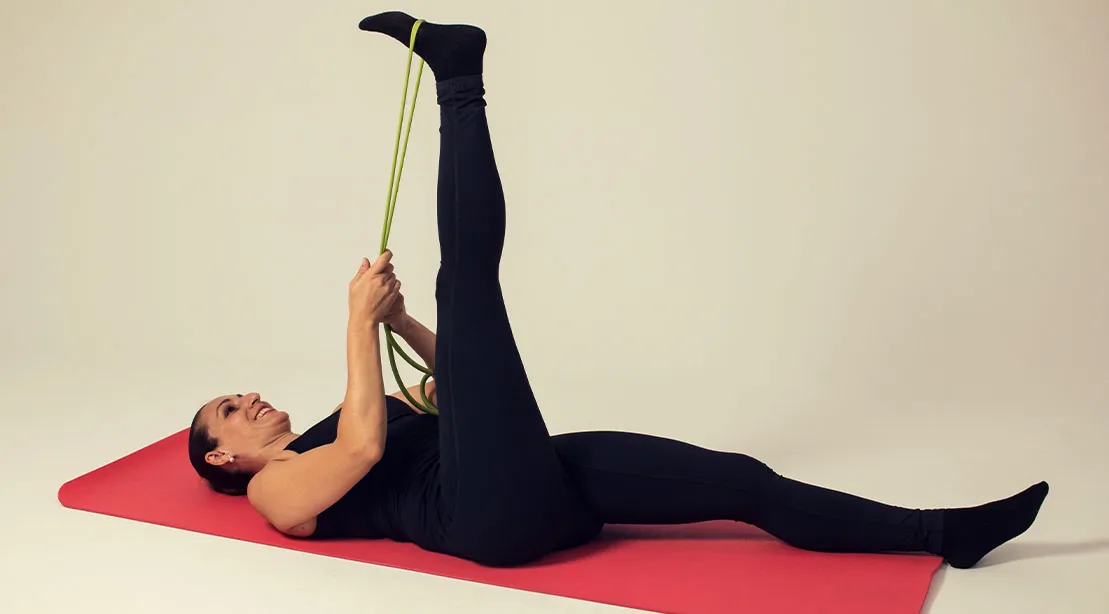
Hamstring Flexibility Without Losing Power
Hamstrings are one of the most misunderstood muscle groups in the human body. They are often blamed for lower-back pain, restricted movement, poor posture, and recurring injuries. At the same time, they are essential for athletic performance, speed, jumping, lifting, and everyday movements like walking and climbing stairs. Because of this dual role, many people struggle with a key question: How do you improve hamstring flexibility without sacrificing strength and power?
The fear is understandable. Stretching is commonly associated with becoming “loose,” weak, or unstable. Athletes worry that flexible hamstrings will reduce explosiveness. Lifters fear losing tension at the bottom of a deadlift. Older adults worry about instability. But the truth is far more nuanced. Flexibility does not inherently reduce power—poorly applied flexibility does. When done correctly, improving hamstring flexibility can actually increase strength, improve force transfer, and reduce injury risk.
Understanding the Hamstrings Beyond “Tight or Loose”
The hamstrings are not a single muscle but a group of three muscles located on the back of the thigh: the biceps femoris, semitendinosus, and semimembranosus. Together, they perform two main actions: hip extension and knee flexion. They work dynamically during walking, sprinting, hinging, jumping, and deceleration.
When people say their hamstrings are “tight,” it does not always mean the muscles are short. Often, tightness is a protective response by the nervous system. Your body limits range of motion when it senses instability, weakness, or poor coordination. Stretching alone may temporarily increase range, but if the underlying issues are not addressed, tightness returns—and sometimes with more vulnerability to injury.
This is why flexibility without strength is incomplete, and strength without mobility is limiting. The goal is not maximum length but usable range of motion under control.
The Myth: Flexibility Equals Weakness
One of the most persistent myths in fitness culture is that stretching makes muscles weak or slow. This belief comes from misinterpreted studies where long static stretches were performed immediately before maximal effort activities. In those specific conditions, temporary reductions in force output were observed.
However, this does not mean flexibility training weakens muscles long term. In fact, research consistently shows that flexibility combined with strength training improves performance, joint health, and resilience. The problem arises when people stretch passively, excessively, and without reinforcing strength in the newly gained range.
Power is not lost because a muscle is long. Power is lost when a muscle cannot generate force at that length.
Why Hamstring Flexibility Matters for Power
Hamstrings play a critical role in force transmission between the upper body and lower body. During sprinting, they act as powerful brakes to decelerate the leg. During lifting, they stabilize the pelvis and spine. During jumping, they help store and release elastic energy.
Limited hamstring mobility can reduce stride length, limit hip hinge depth, increase lumbar compensation, and disrupt timing patterns. All of these reduce efficiency and power output. Ironically, many athletes with “tight” hamstrings are less powerful not because they are flexible, but because they lack controlled mobility.
Improving hamstring flexibility allows for better positioning, improved leverage, and more efficient force production—when paired with strength.
Passive vs Active Flexibility
To protect power, it’s important to understand the difference between passive and active flexibility.
Passive flexibility refers to how far a muscle can stretch when external force is applied—such as pulling your leg with a strap or gravity pulling you into a stretch. This does not require muscular effort.
Active flexibility refers to how far you can move a joint using your own muscular control. This is far more relevant for athletic performance and injury prevention.
Powerful athletes prioritize active flexibility. They train their hamstrings to lengthen under control, produce force in stretched positions, and transition smoothly between lengthening and shortening. Passive flexibility alone does not create this capacity.
Why Overstretching Can Reduce Power
Overstretching without strength creates a gap between mobility and stability. When muscles are lengthened without being trained to control that range, the nervous system responds by reducing force output as a protective mechanism.
This often happens when people perform long static hamstring stretches daily without strengthening exercises like hinges, bridges, or eccentrics. The hamstrings become tolerant to stretch but poor at generating tension. The result is a feeling of looseness paired with weakness.
This is why athletes sometimes feel slower after excessive stretching or why injuries occur in newly gained ranges. The solution is not to avoid flexibility—but to integrate it intelligently.
The Role of Eccentric Strength in Flexibility and Power
Eccentric contractions occur when a muscle lengthens while producing force. This type of training is critical for hamstring health. During sprinting and deceleration, hamstrings work eccentrically to control motion. Most hamstring strains occur during eccentric loading.
Eccentric training increases muscle length, tendon stiffness, and force production simultaneously. Exercises like Romanian deadlifts, Nordic curls, and slow hip hinges improve flexibility while strengthening the muscle in extended positions.
This is one of the most effective ways to gain hamstring flexibility without losing power—and often while increasing it.
Strength Training as Mobility Training
Many people separate stretching and strength as two opposing practices. In reality, well-designed strength training is one of the best forms of mobility training.
Deep hip hinges, controlled deadlifts, split squats, and single-leg exercises all take the hamstrings through large ranges of motion under load. This teaches the nervous system that these ranges are safe and usable.
Unlike passive stretching, strength training builds confidence, coordination, and resilience. The body stops resisting movement because it feels capable of controlling it.
The Importance of Pelvic Position and Core Control
Hamstring tightness is often related to pelvic positioning. An anterior or posterior pelvic tilt can change perceived hamstring length without actual muscle shortening. Weak glutes, poor core control, and prolonged sitting all contribute to altered pelvic mechanics.
Stretching hamstrings without addressing pelvic control often fails. When core stability and hip strength improve, hamstrings often feel less tight even without direct stretching.
This is another reason flexibility alone does not solve the problem—and why strength preserves power.
Dynamic Stretching for Performance
Dynamic stretching involves moving through ranges of motion actively and rhythmically. Leg swings, hip hinges, walking lunges, and controlled kicks are examples.
Dynamic stretches prepare the hamstrings for movement by increasing temperature, neural activation, and coordination. Unlike static stretching, they do not reduce short-term power output. In fact, they often enhance readiness for explosive movement.
For athletes and active individuals, dynamic hamstring mobility is far more relevant than prolonged passive holds before training.
Static Stretching: When and How to Use It
Static stretching is not inherently bad—it just needs proper timing. Long passive hamstring stretches are best used after training, during recovery sessions, or on rest days. At these times, they can improve tissue tolerance, relaxation, and overall range of motion.
The key is moderation and follow-up. Static stretching should not be the only tool used. It must be paired with strength work to reinforce the new range.
When static stretching is used thoughtfully, it supports flexibility without compromising power.
Hamstring Flexibility Across Different Populations
For athletes, the focus should be on eccentric strength, active mobility, and coordination. For lifters, maintaining tension through full hinge depth is crucial. For older adults, flexibility supports independence, walking efficiency, and balance—but strength is essential to prevent falls.
Across all populations, the principle remains the same: flexibility should increase function, not replace strength.
Age does not require abandoning power. In fact, maintaining hamstring strength and mobility is one of the best predictors of long-term independence and injury prevention.
Common Mistakes That Cost Power
One of the biggest mistakes people make is chasing extreme flexibility without purpose. Touching toes or achieving splits may look impressive, but if those ranges are not used functionally, they provide little benefit.
Another mistake is ignoring unilateral differences. One tight hamstring often compensates for weakness elsewhere. Stretching both sides equally may mask imbalances rather than solve them.
Finally, many people neglect recovery and load management. Hamstrings are heavily involved in daily movement. Overloading flexibility work without adequate recovery can irritate the tissue and reduce performance.
Building a Balanced Hamstring Strategy
A power-preserving flexibility approach includes several elements: controlled mobility, eccentric strength, dynamic preparation, and strategic static stretching. None of these alone are sufficient, but together they create adaptable, resilient hamstrings.
The body thrives on consistency rather than extremes. Small improvements maintained over time lead to durable flexibility that supports strength rather than undermines it.
Final Thoughts: Flexibility Is a Skill, Not a Trade-Off
Hamstring flexibility does not have to come at the cost of power. When flexibility is developed actively, reinforced with strength, and integrated into real movement, it enhances performance rather than diminishing it.
The goal is not to stretch more—it is to move better. Strong hamstrings that can lengthen, shorten, and stabilize under load are not only flexible but powerful.
True flexibility is not how far you can stretch—it is how well you can control movement through your full range. And when that control is present, power is not lost. It is unlocked.