 By StretchToStrength.blog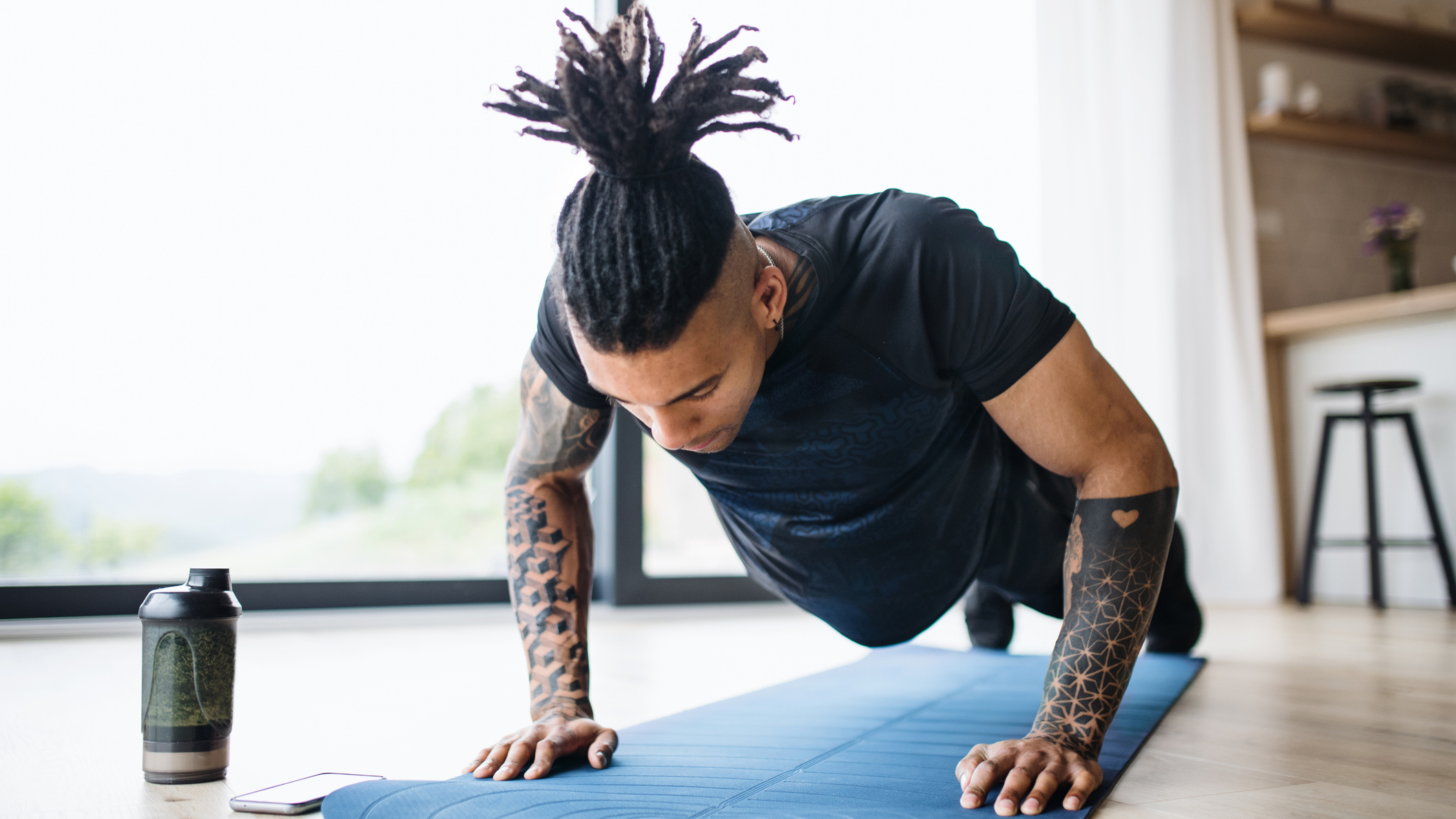
Introduction
Why bodyweight training is the perfect starting point
Bodyweight training is simple, safe, and effective — which makes it ideal for beginners. You don’t need equipment, a gym membership, or complicated programming to get stronger, move better, and build confidence. Because you’re training with the weight you already carry, the risk of catastrophic overload is low and progress is easily measurable: more reps, better form, longer holds, or smoother movement.
What beginners really need (and don’t need)
Need:
- Clear, repeatable movement patterns (push, squat, hinge, lunge, core).
- Attention to technique over volume. A few quality reps beat many sloppy ones.
- Progressive overload (small, consistent increases).
- Consistent frequency and adequate recovery.
Don’t need:
- Heavy equipment, advanced gadgets, or complex programs.
- High-intensity training every session. Beginners benefit more from consistency and control than from going to failure daily.
- Dozens of different exercises. Mastering a handful of basics gives the best return on time.
Understanding Body-weight Strength
What bodyweight training actually builds
Bodyweight training builds three related qualities:
- Strength — ability to produce force (e.g., harder push-up variations, single-leg bridge).
- Endurance — ability to repeat work for longer (higher reps or longer holds).
- Control / motor skill — coordination, balance, and ability to move with precision.
A single exercise can train more than one quality depending on how you use it (low reps = strength focus, high reps = endurance focus, slow controlled reps = control).
Strength vs. endurance vs. control
- Strength improvements come from increasing resistance or mechanical difficulty (e.g., incline → knee → full push-up).
- Endurance improves by increasing reps, rounds, or hold time (wall sit, high-rep squats).
- Control comes from deliberate practice: slow tempo, pausing at weak points, and attention to alignment (this reduces injury risk and unlocks progress to harder moves).
Why mastering basics matters more than doing many exercises
Beginners get the most benefit from mastering movement patterns. Clean mechanics transfer to almost every daily activity (standing up, carrying groceries, climbing stairs) and make progressing to advanced variations safer and faster. Practicing fewer exercises well builds a durable, adaptable foundation — whereas doing many exercises with poor technique often leads to plateaus and injuries.
Key Principles for Beginners
Proper form before reps
- Prioritize alignment and control. If form breaks down, stop or reduce the difficulty.
- Use regressions (wall push-ups, box squats, knee planks) to learn the pattern before scaling up.
- Record a short video occasionally to check posture and joint angles — small tweaks produce big gains.
Controlled tempo and breathing
- Tempo example: 2s down (eccentric) — 1s hold — 1s up (concentric). Slower eccentrics are particularly effective for building strength.
- Breathe intentionally: exhale on effort (e.g., push, stand), inhale on the easier phase. Don’t hold breath long-term — use short bracing on heavy-ish reps only.
- Control beats speed. Fast reps train power and conditioning, but early-stage training should bias control.
How often beginners should train
- Aim for 2–4 full-body sessions per week.
- 2 sessions/week — great for absolute beginners or very busy schedules.
- 3 sessions/week — balanced mix of stimulus and recovery (recommended).
- 4 sessions/week — okay if you split sessions (upper/lower or push/pull + legs/core) and recover well.
- Keep sessions short (20–40 minutes) and consistent. Recovery (sleep, nutrition, rest days) matters as much as the workout itself.
When to stop vs. when to push slightly
- Stop if you experience: sharp joint pain, dizziness, or sudden loss of coordination. These are red flags.
- Back off when technique collapses (rounded spine, knees caving, uncontrolled momentum). Reduce reps, shorten range, or pick an easier variation.
- Push slightly when: form is solid and you feel 1–2 quality reps remaining. That “productive fatigue” drives adaptation. Aim for consistent, small improvements (1–2 extra reps or 1 more set every 1–2 weeks) rather than maximal effort every session.
Upper-Body Bodyweight Strength Moves
Wall Push-Ups (learning proper pushing mechanics)
Wall push-ups are the safest and most accessible way to learn how a proper push-up should feel. The upright position reduces load while teaching correct alignment.
How to do it:
Stand facing a wall, hands at chest height and shoulder-width apart. Step feet back slightly so your body forms a straight line. Lower your chest toward the wall, then push away.
Key cues:
- Keep your body straight from head to heels
- Elbows at about a 30–45° angle
- Brace your core and squeeze glutes lightly
Why it works:
Teaches pushing mechanics without joint stress. Ideal for absolute beginners or those returning from inactivity.
Progression:
Step feet farther from the wall → move to incline push-ups.
Incline Push-Ups (building pressing strength safely)
Incline push-ups increase difficulty while staying shoulder-friendly.
How to do it:
Hands on a sturdy bench, box, or table; feet on the floor. Lower chest toward hands, then press up.
Key cues:
- Chest leads the movement, not the head
- No sagging hips or flared elbows
- Control the lowering phase
Why it works:
Builds upper-body strength while keeping load manageable and scalable.
Progression:
Lower the surface height over time.
Knee Push-Ups (progressing toward full push-ups)
This variation bridges the gap between incline and full push-ups.
How to do it:
Knees on the floor, body in a straight line from knees to head. Lower chest toward the floor, then press up.
Key cues:
- Maintain a neutral spine
- Lower under control
- Exhale as you push up
Why it works:
Builds pressing strength and core stability needed for full push-ups.
Progression:
Slow negatives → full push-ups.
Bench or Box Dips (shoulder-friendly range only)
Dips can be useful if done with strict control and limited depth.
How to do it:
Hands on bench behind you, knees bent, feet on floor. Lower hips slightly, then press up.
Key cues:
- Keep shoulders down and away from ears
- Stop before shoulder discomfort
- Move slowly
Why it works:
Strengthens triceps and shoulder stabilizers when performed conservatively.
Caution:
Skip this exercise if it causes shoulder pain.
Plank Hold (upper-body and core connection)
The plank teaches full-body tension and posture.
How to do it:
Forearms on the floor, body straight from head to heels.
Key cues:
- Brace core and glutes
- Keep neck neutral
- Breathe steadily
Why it works:
Connects upper-body strength with core stability.
Progression:
Increase hold time → add shoulder taps.
Lower-Body Bodyweight Strength Moves
Bodyweight Squats (foundation of leg strength)
The squat is one of the most important human movement patterns.
How to do it:
Feet shoulder-width apart, sit hips back and down, then stand up.
Key cues:
- Knees track over toes
- Chest tall
- Weight through mid-foot and heels
Why it works:
Builds leg strength, mobility, and coordination.
Chair or Box Squats (control and confidence)
A beginner-friendly way to learn squat depth.
How to do it:
Sit back onto a chair or box, lightly touch, then stand up.
Key cues:
- Control the descent
- Avoid “dropping” onto the chair
- Drive through heels to stand
Why it works:
Improves control and removes fear of falling backward.
Reverse Lunges (joint-friendly leg strength)
Stepping backward reduces knee stress compared to forward lunges.
How to do it:
Step one leg back, lower into a lunge, then return to standing.
Key cues:
- Front knee stable
- Upright torso
- Controlled step back
Why it works:
Builds single-leg strength and balance with less joint strain.
Glute Bridges (activating hips and protecting the lower back)
Essential for hip strength and spinal support.
How to do it:
Lie on your back, knees bent, feet on floor. Lift hips by squeezing glutes.
Key cues:
- Push through heels
- Avoid over-arching lower back
- Pause briefly at the top
Why it works:
Strengthens glutes, reduces lower-back stress, and improves posture.
Wall Sit (building leg endurance safely)
A simple but effective isometric leg exercise.
How to do it:
Back against a wall, hips and knees at about 90°.
Key cues:
- Knees over ankles
- Back flat against wall
- Breathe calmly
Why it works:
Builds leg endurance and mental resilience with minimal injury risk.
Benefits of Bodyweight Training for Beginners
No equipment needed — accessible anywhere
Bodyweight training removes the biggest barrier to starting: equipment. You can train at home, in a park, or while traveling. This convenience makes it far easier to stay consistent, especially in the early stages when building the habit matters more than training intensity.
Teaches movement patterns and joint-friendly strength
Instead of isolating muscles, bodyweight exercises train natural movement patterns like pushing, squatting, lunging, and bracing. These patterns improve joint health, coordination, and control while reducing unnecessary stress on the body.
Builds a durable base for future training
A strong bodyweight foundation transfers directly to other training styles. Whether you move on to weights, sports, or HIIT, you’ll have better mechanics, stronger stabilizers, and lower injury risk.
Improves balance, coordination, and posture
Because many bodyweight exercises require whole-body tension and stability, they challenge balance and posture naturally. Over time, this leads to better movement awareness, improved alignment, and more confidence in everyday tasks.
Low barrier to consistency — easier to form a habit
Simple routines are easier to repeat. When workouts don’t feel overwhelming, you’re more likely to show up consistently. Consistency is what produces results — not perfection or intensity.
Conclusion & Final Tips
Bodyweight strength training is one of the smartest ways to begin your fitness journey. Start simple. Choose 4–6 reliable exercises from the sections above, focus on clean form, and train 2–4 times per week. Progress gradually by adding reps, slowing tempo, or advancing to slightly harder variations.
Track one small metric each session — reps, time, or sets — so you can clearly see improvement. These small, repeatable wins build momentum. Stay patient, stay consistent, and let the basics do the work.