 By StretchToStrength.blog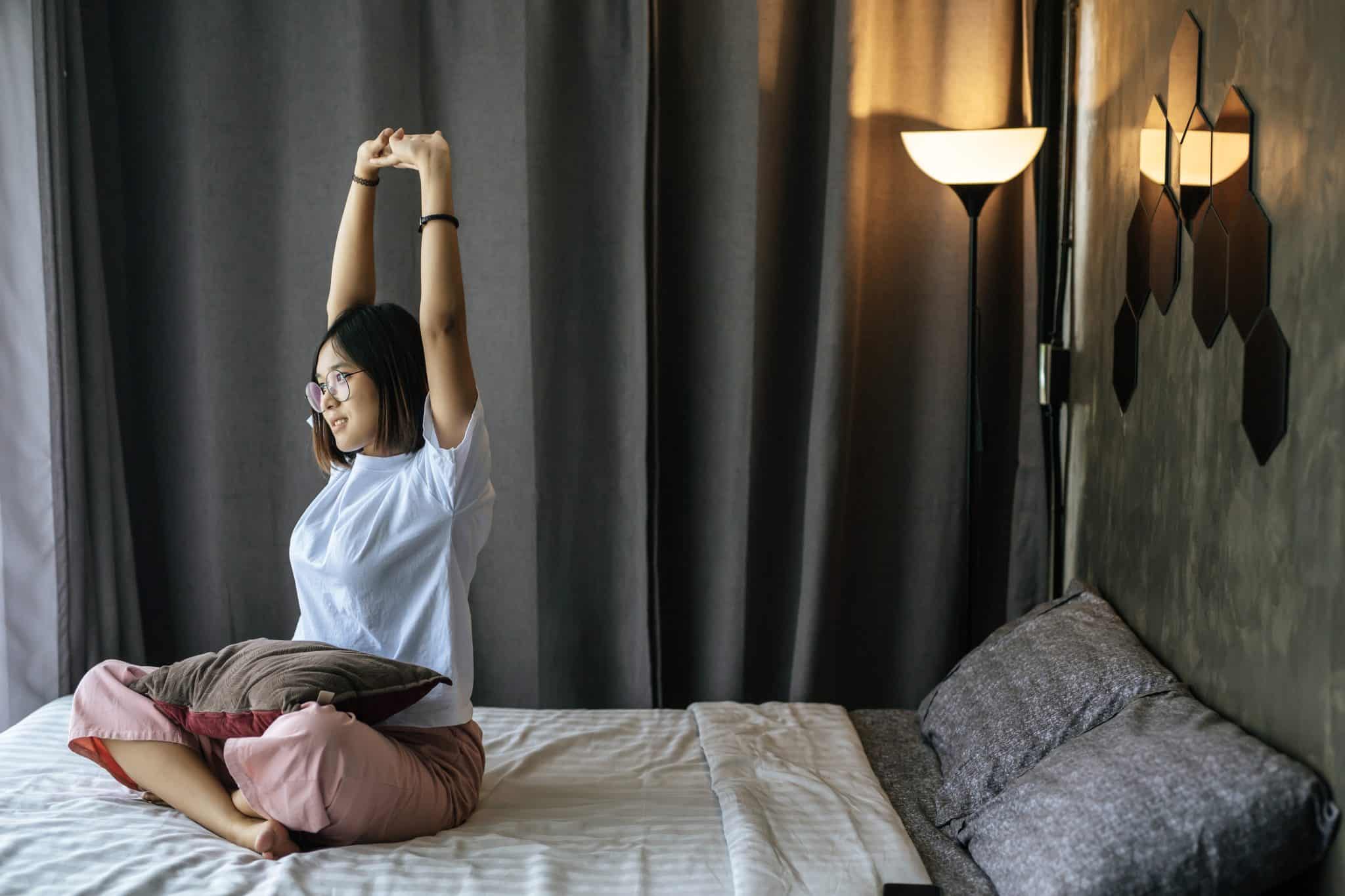
Introduction: Why Night Stretching Improves Sleep
In today’s fast-paced world, many people climb into bed with bodies that are still in “go mode.” Long hours of sitting, screen time, stress, and daily responsibilities leave muscles tense and the mind overstimulated. Night stretching acts as a bridge between the demands of the day and the rest your body needs to recover. By gently moving and lengthening your muscles before bed, you signal to your body that it’s time to slow down, relax, and prepare for sleep.
Unlike intense workouts or aggressive stretching, a calm nighttime routine focuses on release rather than performance. It helps unwind physical tightness, quiet mental chatter, and create a consistent cue for sleep. Over time, this simple habit can significantly improve both how quickly you fall asleep and how well you stay asleep through the night.
The Connection Between Movement and Sleep Quality
Sleep is not just about lying still—it’s deeply connected to how your body moves during the day. When muscles remain stiff and joints feel restricted, your body may struggle to find comfortable sleeping positions. This discomfort can lead to frequent tossing and turning, lighter sleep stages, and early wake-ups.
Gentle movement in the evening improves circulation, delivers oxygen to tired tissues, and reduces residual muscle tension. This physical ease allows your body to settle more comfortably into rest. Stretching also enhances body awareness, helping you recognize and release subtle areas of tightness you may not notice otherwise. The result is a smoother transition from wakefulness to sleep and a more stable, uninterrupted night of rest.
How Evening Tension Affects Your Nervous System
Evening tension doesn’t just live in your muscles—it directly impacts your nervous system. Stress, poor posture, and mental overload keep your sympathetic nervous system (the “fight or flight” response) switched on. When this system remains active late into the evening, your body stays alert, your heart rate remains elevated, and your mind struggles to shut down.
Tight shoulders, clenched jaws, stiff hips, and a rigid lower back are physical signs that your nervous system hasn’t fully relaxed. Without intentional release, this tension can delay sleep onset and reduce sleep depth. Night stretching helps reverse this state by calming nerve activity and encouraging a sense of safety and relaxation throughout the body.
The Science Behind Stretching Before Bed
Stretching before sleep works because it aligns with how the body naturally prepares for rest. Slow, controlled movements paired with deep breathing help shift your physiology away from stress and toward recovery. Unlike daytime stretching, which may aim to improve performance or mobility, nighttime stretching supports downregulation—slowing everything down.
Research shows that gentle stretching can improve heart rate variability, reduce muscle tone, and promote relaxation responses in the brain. This creates an internal environment that supports melatonin release and healthy sleep cycles.
Parasympathetic Activation and Relaxation
The parasympathetic nervous system is often referred to as the “rest and digest” system. Activating it is essential for quality sleep. Slow stretching, especially when combined with nasal breathing and long exhalations, directly stimulates this system.
As parasympathetic activity increases, heart rate slows, blood pressure decreases, and muscle tension naturally melts away. Your body shifts into a state of calm readiness for sleep. This is why night stretches should feel soothing, not challenging. The goal is relaxation, not range of motion records.
Reducing Cortisol and Preparing the Body for Rest
Cortisol, the primary stress hormone, follows a daily rhythm—high in the morning and low at night. However, chronic stress, late-night screen use, and physical tension can keep cortisol elevated when it should be falling. Gentle evening stretching helps lower cortisol levels by reducing stress signals from tight muscles and overactive nerves.
As cortisol decreases, your body becomes more receptive to melatonin, the hormone responsible for sleep. This hormonal shift makes it easier to feel sleepy, stay asleep, and wake up feeling refreshed rather than drained.
Benefits of a Night Stretch Routine
A consistent night stretch routine offers benefits that go far beyond flexibility. It supports both physical recovery and mental relaxation, making sleep more efficient and restorative.
Faster Sleep Onset
By calming the nervous system and releasing physical tension, night stretching helps you fall asleep faster. Instead of lying awake with a restless body and racing thoughts, your system enters a relaxed state that welcomes sleep naturally.
Deeper, More Restorative Sleep
When muscles are relaxed and joints feel comfortable, your body can remain in deeper sleep stages for longer periods. This leads to better tissue repair, improved immune function, and enhanced mental clarity the next day.
Reduced Muscle Stiffness and Joint Discomfort
Stretching before bed prevents overnight stiffness, especially in the hips, lower back, neck, and shoulders. You’re less likely to wake up feeling tight or achy, making mornings easier and movement smoother throughout the day.
When and How to Stretch at Night
Best time to stretch before bed
Aim to stretch 20–45 minutes before you want to sleep. That gives your nervous system time to down-regulate and your body time to settle. If you’re short on time, a 5–10 minute mini-routine is effective too — just focus on breathing and a few key releases. Avoid vigorous exercise or intense, dynamic stretching within an hour of bedtime — those raise heart rate and body temperature and make falling asleep harder.
How long your routine should be
- Full routine: 12–20 minutes — enough to move through the whole body without rushing.
- Quick routine: 5–8 minutes — choose 3–4 stretches that target your biggest tight spots.
- Maintenance: 3–5 minutes on very busy nights (deep breathing + one long-held stretch) still helps.
Breathing techniques to enhance relaxation
Use slow, intentional breathing during every stretch. A few practical patterns:
- Diaphragmatic breathing (belly breathing): inhale through the nose so your belly rises, exhale slowly through the nose or mouth so it falls. Focus on long exhales.
- 4–6 exhale pattern: inhale for ~3–4 seconds, exhale for ~5–6 seconds. Longer exhales stimulate the parasympathetic system.
- Box breathing (for calming the mind): inhale 4s — hold 4s — exhale 4s — hold 4s (do 3–4 rounds).
- Breath with the movement: inhale to prepare, exhale as you deepen or hold the stretch — make the exhale control the release.
Always keep breathing smooth and steady; if you hold your breath at any point, ease back.
Key Muscles to Target for Better Sleep
Tightness in these areas commonly disturbs sleep — targeting them helps you settle and stay comfortable.
Neck and shoulders
Why: stress and screen posture create tight upper traps and neck extension, causing night-time tension and headaches.
Focus: gentle mobility and long holds to release traps, levator scapulae, and pecs.
Hips and lower back
Why: stiff hips shift load to the lower back and pelvis; discomfort often wakes people at night.
Focus: hip openers, posterior chain lengthening, and gentle rotational releases.
Hamstrings and calves
Why: tight hamstrings pull on the pelvis; tight calves can disturb sleep by contributing to restless legs.
Focus: long, supported hamstring stretches and calf lengthening.
Spine and posture muscles
Why: a stiff thoracic spine reduces breathing efficiency and comfort while lying down.
Focus: thoracic mobility and gentle spinal decompression to make lying supine more comfortable.
The Complete Night Stretch Routine for Better Sleep
Total time: ~12–16 minutes. Hold times and reps included — do the sequence slowly, breathing throughout.
1) Gentle neck and upper-back release — 3 minutes
- Seated chin tuck (30–45s): Sit tall. Gently draw chin toward chest (not forced). Hold, breathe. Repeat 1–2x.
- Upper-trap stretch (30s each side): Drop right ear to right shoulder, keep left hand down or gently hold head. Don’t pull hard. Breathe. Swap sides.
- Thread-the-needle (60s total): On hands and knees, slide right arm under left, rest right shoulder and ear to the mat. Breathe into the right upper back for 30s, switch sides.
Cues: keep shoulders away from ears, soften the jaw, avoid sharp pain.
2) Seated spinal stretches — 2–3 minutes
- Seated cat–cow (1 minute): Sit on edge of a chair or cross-legged. Inhale, arch the upper back and look slightly up; exhale, round the spine and tuck the chin. Move slowly with breath for 6–8 cycles.
- Seated spinal twist (30s each side): Sit tall, inhale to lengthen, exhale twist gently to one side using the breath, hold. Switch.
Cues: lead with the chest on twists, not the chin; keep both sit bones grounded.
3) Hip openers and lower-body stretches — 5–7 minutes
- Figure-4 (supine) — 60s per side: Lie on your back. Cross right ankle over left knee, thread hands behind left thigh and gently pull left leg toward chest. Breathe and soften into the hip. Switch. Use a strap if needed.
- Knees-to-chest (60s): Hug both knees to chest, rock gently side-to-side to massage the low back.
- Supine hamstring with strap (60s per side): One leg extended on the floor, other lifted with a strap or towel behind the foot. Keep a soft knee if hamstrings are very tight.
- Calf stretch (30–45s per side): Sit with leg extended, ankle flexed toward you; or stand and press foot against a wall. Hold long exhales.
Cues: keep the breath long on holds; avoid bouncing; stop before intense pain.
4) Thoracic mobility and full-body relaxation stretch — 2–4 minutes
- Child’s pose with slow breathing (60–90s): From hands-and-knees, sit back toward heels, extend arms forward or by sides. Breathe into the back and ribs.
- Legs-up-the-wall (2–5 minutes) OR Savasana/corpse pose (2–5 minutes): Choose what feels best. For legs-up-the-wall, lie on your back with legs vertical against a wall — excellent for venous return and relaxation. For Savasana, lie flat, arms relaxed, palms up. Scan body from toes to head, softening each area. Breathe long exhales.
Cues: let gravity do the work; focus on exhalation and softening.
Quick 7-Minute Version (if you’re pressed for time)
- Diaphragmatic breathing (1 minute) — long exhales.
- Neck upper-trap stretch (30s per side).
- Figure-4 supine (45s per side).
- Supine hamstring strap (45s per side).
- Savasana or legs-up-the-wall (1 minute).
Modifications & Safety Notes
- Use props: pillows, bolsters, straps, and blankets make holds gentler and more comfortable.
- Chair option: do neck, seated twists, and leg-supported hamstring stretches while seated if getting down on the floor is hard.
- If you have pain or an injury: stop any stretch that causes sharp pain or numbness. Prefer gentle mobility over long holds; consult a healthcare professional if unsure.
- Don’t overstretch: the goal is relaxation — a mild pull and full breathing is enough. Avoid pushing to new ranges at night, which can be stimulating or injure tissue.
Stretching Mistakes That Can Disrupt Sleep
Night stretching should calm your body, not stimulate it. The wrong approach can do the opposite and make falling asleep harder.
Overstretching or pushing too hard
Stretching to your limits late at night sends a stress signal to your nervous system. Pain, shaking, or forced positions activate protective muscle contractions and increase alertness. At night, you should aim for about 60–70% intensity—a gentle pull you can hold while breathing slowly. If a stretch feels challenging instead of soothing, ease off.
Fast, aggressive movements
Bouncing, jerky motions, or rapid transitions raise heart rate and muscle tone. These movements are better suited for warm-ups or workouts, not bedtime. Night stretching should be slow, controlled, and smooth, allowing your nervous system to stay calm and receptive.
Holding tension instead of relaxing
Many people stretch while unconsciously clenching their jaw, shoulders, or fists. This defeats the purpose. If you notice shallow breathing or tightness elsewhere in the body, back out slightly and refocus on slow exhales. True night stretching feels soft and heavy, not strained.
Combining Stretching With a Bedtime Wind-Down Ritual
Stretching becomes far more powerful when it’s part of a broader wind-down routine rather than a standalone activity.
Stretching with deep breathing
Breath is the fastest way to influence your nervous system. Pair each stretch with slow nasal breathing and long exhales. Think of the stretch as something you sink into with each exhale rather than something you push into.
Pairing stretches with meditation or journaling
A short meditation after stretching helps settle the mind once the body is relaxed. Even 2–5 minutes of quiet breathing or a body scan can deepen the calming effect. Journaling can also help—writing down worries or tomorrow’s tasks clears mental clutter so your brain doesn’t carry it into bed.
Creating a consistent nighttime routine
Consistency matters more than duration. Doing the same sequence, in the same order, at roughly the same time each night trains your brain to associate stretching with sleep. Over time, your body will start relaxing automatically as soon as the routine begins.
Who Can Benefit Most From Night Stretching
Almost everyone can benefit, but certain groups often see especially noticeable improvements.
Desk workers and sedentary lifestyles
Long hours of sitting shorten hip flexors, stiffen the upper back, and tighten the neck and shoulders. Night stretching reverses these patterns, making it easier to lie comfortably and reducing next-day stiffness.
Athletes and physically active individuals
Training creates muscle tension and nervous system fatigue. Gentle night stretching supports recovery without overstimulation, helping athletes sleep deeper and wake up feeling less sore.
People with back pain or joint stiffness
Carefully chosen stretches reduce compressive stress on the spine and joints. When done gently, night stretching can decrease discomfort that otherwise disrupts sleep. The key is choosing supported positions and avoiding painful ranges.
How Often Should You Do a Night Stretch Routine?
Daily vs. occasional stretching
For best results, aim for daily night stretching, even if it’s brief. Consistency teaches your nervous system to downshift reliably at bedtime. Occasional stretching still helps, but the sleep benefits compound with regular practice.
Adjusting the routine for busy nights
On busy evenings, shorten the routine instead of skipping it:
- 2–3 minutes: deep breathing + one long-held stretch
- 5 minutes: neck release + hips or hamstrings + breathing
- 10–15 minutes: full routine
Think of night stretching as a signal, not a workout. Even a few minutes tells your body it’s safe to rest.
Conclusion: Sleep Better by Moving Smarter at Night
Quality sleep doesn’t come from forcing rest—it comes from preparing the body to relax. Night stretching is a simple but powerful way to guide your nervous system out of stress and into recovery. By gently releasing muscle tension, slowing your breath, and calming your mind, you create the conditions your body needs to fall asleep faster and stay asleep longer.
True relaxation isn’t about how deep you stretch; it’s about how well you let go. When movement is slow, breathing is steady, and effort is low, your body shifts naturally into a restorative state. Over time, this leads to better sleep quality, reduced stiffness, improved recovery, and more energy the next day.
Making night stretching a lifelong habit doesn’t require perfection or long routines. Even a few minutes each evening can serve as a powerful signal that the day is done. Stay consistent, listen to your body, and keep the focus on calm—not intensity. When you move smarter at night, sleep becomes easier, deeper, and far more refreshing.